
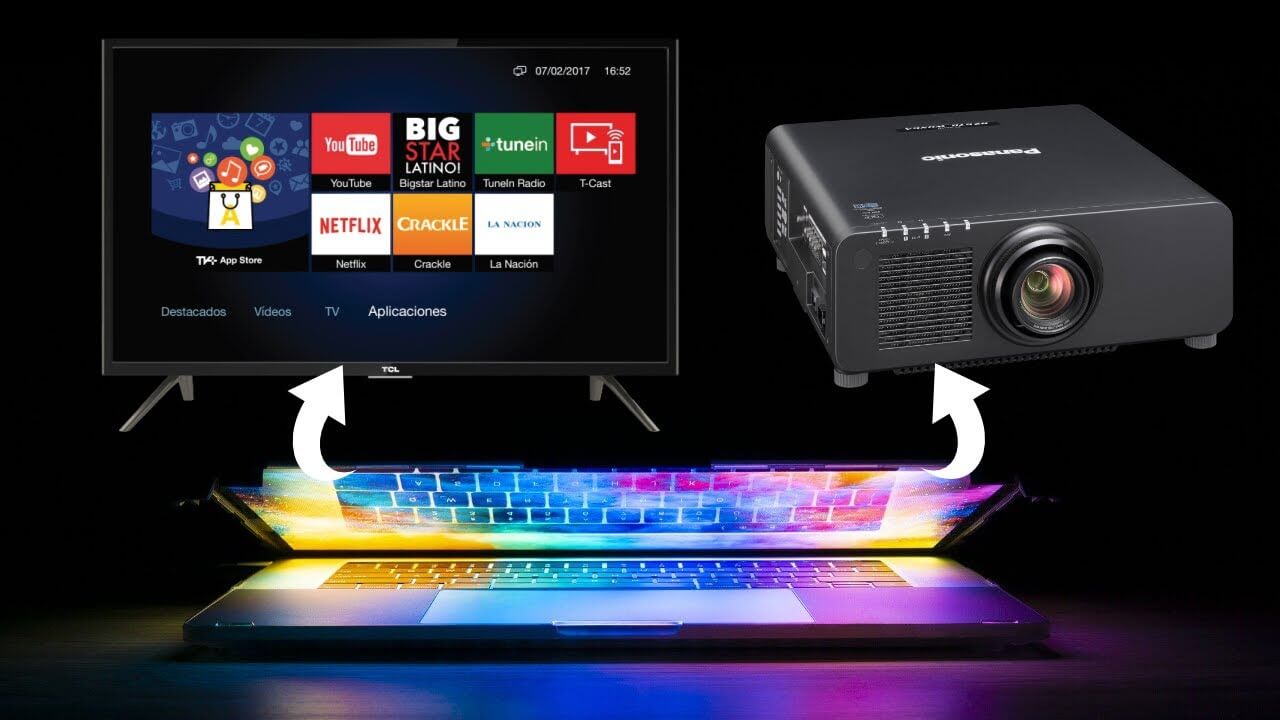
A laptop can be connected to a projector wirelessly using built in casting tech like Miracast, AirPlay, Chromecast, or a wireless HDMI solution. Boss Projector models, led by the Boss S7, support several of these methods and make the setup fast and reliable for movies, presentations, and casual gaming.
Why wireless matters
Lugging cables feels old school. People want clean setups and quick starts. They want to walk in, click, and present or stream.
This is especially true for busy pros and home users who pick the Boss S7 as their go-to projector. It gives high brightness and smooth streaming, so a wireless link from laptop to big screen feels natural. The reader’s pain point is clear: they want simplicity. Their desire is also clear: a large screen that works with their laptop without fuss.
The quick answer
To connect a projector to a laptop wirelessly, use the laptop’s native casting feature or a compatible wireless receiver. On Windows use Miracast or a Chromecast device. On Mac use AirPlay or a Chromecast. Plug-in wireless HDMI kits offer another option. Boss S7 supports Wi-Fi casting and external receivers for flexible setups.
What methods work best
There are several ways to connect. Each has pros and cons.
1. Miracast
Works mainly on Windows laptops. It mirrors the screen without extra apps. It is convenient for presentations and slides.
2. AirPlay
Works on Macs and iOS devices. It streams video to devices that accept AirPlay. It’s very simple for Apple users.
3. Chromecast and Google Cast
Requires a Chromecast dongle or a projector with Google Cast built in. It works across Windows, Mac, and ChromeOS via browser or supported apps.
4. Wireless HDMI kits
These include a transmitter that plugs into the laptop and a receiver that plugs into the projector. They act like a long HDMI cable without the wire.
5. Proprietary apps and vendor tools
Some projectors offer a dedicated app or built-in Android system for casting. Boss projectors include Android based systems and support casting apps for smooth linking.
Why Boss S7 is the top choice for wireless laptop connections
Boss S7 is the flagship. It has a mix of brightness, sharpness, and connectivity that fits most laptop use cases.
1. High brightness
Strong lumens let the screen stay readable in bright rooms.
2. DLP clarity and 4K resolution
This keeps text crisp for slides and spreadsheets.
3. Built in smart features and Wi-Fi
The S7 supports wireless casting options. It accepts standard protocols and works with external receivers.
4. Low input lag for casual use
It performs well for video and presentations. For competitive gaming, a wired link still offers the fastest response.
5. Robust correction tools
4D keystone and focus let the user set the projector off-center and still get a neat screen.
6. Local support and warranty
Boss S7 buyers get support and a one year parts and labor warranty through authorized sellers.
See the Boss S7 4K Portable Projector on Best Buy
Step by step guide: Connect a Windows laptop wirelessly using Miracast
Windows laptops commonly use Miracast to wirelessly mirror the display. Turn on Miracast on the projector, press Windows key P and select Connect to a wireless display, then choose the projector name.
Steps in detail
Check if the laptop supports Miracast. Press Windows key, type Projecting to this PC, and open the settings.
On the Boss S7, enable screen mirroring or wireless display mode from the input menu.
On the laptop press Windows key and P. Choose Duplicate or Second screen only if presenting.
Click Connect to a wireless display and pick the Boss projector from the list.
Allow pairing and enter a PIN if prompted.
Tweak resolution or scaling in display settings for best fit.
Troubleshooting tips
If the projector does not show up, restart both devices and ensure both are on the same network or Miracast mode.
Step by step guide: Connect a Mac laptop using AirPlay or Chromecast
Macs use AirPlay to mirror or extend the screen, or they can cast via Chrome or a Chromecast. Turn on AirPlay on the projector or plug in a Chromecast and choose the display from the Mac menu bar.
AirPlay method
Make sure the Mac and the Boss projector are on the same Wi-Fi network and that the projector accepts AirPlay or has a receiver.
Click the AirPlay icon in the Mac menu bar.
Select the projector name.
Pick mirror or use as a separate display.
Chromecast method
Plug a Chromecast into the projector HDMI.
On the Mac open Chrome, click the three dots menu, choose Cast, and select the device.
Choose Cast desktop to stream the whole screen.
Notes
AirPlay usually gives very smooth performance for video and slides. Chromecast works well for browser content and many apps.
Using a wireless HDMI kit when protocols do not match
A wireless HDMI kit plugs into the laptop HDMI output and the projector HDMI input; it creates a direct wireless HDMI link that acts like a long cable without the cable.
Why use it
It is protocol-agnostic. It works when Miracast, AirPlay, or casting apps are not available. It also keeps latency lower than many software casting methods.
How to set it up
Plug the transmitter into the laptop HDMI.
Plug the receiver into the projector HDMI.
Power both units.
They pair automatically or with one button press.
Set the projector to the correct HDMI input.
Best use case
Large venues or where IT does not allow device pairing. It also works for older laptops without built in casting.
Practical tips for best wireless performance
Keep the projector and laptop close to the router when using Wi-Fi based casting. Position the router to minimize walls or interference. Choose the 5 GHz Wi-Fi band if available. Update the projector firmware and the laptop OS before first use. For presentations, close unused apps so the CPU can handle the cast smoothly.
Use wired Ethernet for the projector if it supports it and the goal is to stream very high bit rate content. This gives a stable backbone while still letting the laptop cast over the network in some setups.
If audio matters, pair a Bluetooth speaker to the projector or laptop for fuller sound. Boss S7 supports Bluetooth audio output for simple speaker pairing.
Set-up checklist for a meeting or event
Power on projector and laptop.
Confirm network and software versions.
Launch presentation and test resolution.
Pair wirelessly and test audio.
Walk through the presentation once.
Have a USB-C or HDMI cable ready as backup.
Security and IT considerations
When casting in office networks, always follow IT rules. Public networks may block device discovery. Miracast can work over ad-hoc links if allowed, but many corporate networks restrict it. Wireless HDMI is safer for secure contexts because it avoids network routing. For sensitive data, use direct cable connections.
Common problems and fast fixes
Problem: The image lags or stutters.
Fix: Reduce resolution, use 5 GHz Wi-Fi, or switch to a wired link.
Problem: Audio is out of sync.
Fix: Re-pair audio device or use projector audio output rather than laptop output. Check audio delay settings.
Problem: Projector not in list.
Fix: Restart both devices and ensure projector is discoverable. Disable VPNs on the laptop.
Problem: Casting drops mid presentation.
Fix: Move devices closer to router, or use wireless HDMI transmitter for a stable link.
Use cases and real world examples
Classroom teaching
Teachers can mirror slides and videos wirelessly from laptops. Boss S7’s brightness keeps text readable in partially lit rooms.
Business meetings
Quick connect and present from a personal laptop. The S7’s keystone tools adjust the image when the projector sits off-center.
Home cinema
Stream movies from laptop apps and play them on a large screen. The S7’s 4K and strong lumens deliver a crisp image for family nights.
Hybrid events
Presenters can switch between local laptop and remote video sources while the S7 keeps the image consistent.
Comparing wireless vs wired for laptops
Wireless pros
No cable clutter. Flexible placement. Quick switching between presenters.
Wireless cons
Possible input lag. Variable quality depending on network.
Wired pros
Lowest latency. Highest stability.
Wired cons
Cables limit placement and can get messy.
Best practice
Use wireless for slides and streaming. Use wired for competitive gaming or when low latency is critical. Boss S7 supports both modes for maximum flexibility.
Secondary Boss models: S8A and S5A
Boss S8A
S8A offers Google TV, auto-focus, and strong Wi-Fi. It works great for users who want a TV-like smart interface and simple casting from laptops.
See Boss S8A on Best Buy
Boss S5A
S5A is the compact Full HD option. It supports Wi-Fi casting and is ideal for smaller rooms where a portable projector makes sense.
See Boss S5A on Best Buy.
Frequently Asked Questions
Yes. Many modern laptops and projectors support Miracast, AirPlay, or Chromecast natively. If not, a wireless HDMI kit fills the gap.
A direct wired HDMI connection gives the lowest latency. Wireless HDMI kits generally outperform software-based casting for latency.
It can, but it depends on network bandwidth and device support. For rock-solid 4K streaming, use wired HDMI or high quality wireless HDMI kits.
Public Wi-Fi can be insecure and may block device discovery. For privacy and security, prefer wired links or a private network.
They must be on the same local network or you must use direct wireless modes. Wireless HDMI avoids network issues entirely.
Final recommendations
For most laptop users who want a premium wireless experience, Boss S7 is the top pick. It blends bright, sharp 4K visuals with built in Wi-Fi and flexible inputs. Pair it with a wireless HDMI kit if compatibility is uncertain. Keep a cable handy as backup.
If the user primarily wants streaming with a smart TV interface, S8A is a strong alternative. If they need a compact unit for small rooms, S5A fits well.